There is something deeply human about rhythm. Long before modern music stages and digital playlists existed, people gathered in circles with drums, clapping hands and creating rhythms together. Across cultures and centuries, these circles became spaces for celebration, storytelling, healing, and community.
Today, this ancient practice continues in the form of drum circles, a unique musical experience where anyone can participate, regardless of age or musical background.
But what exactly is a drum circle?
What Is a Drum Circle?
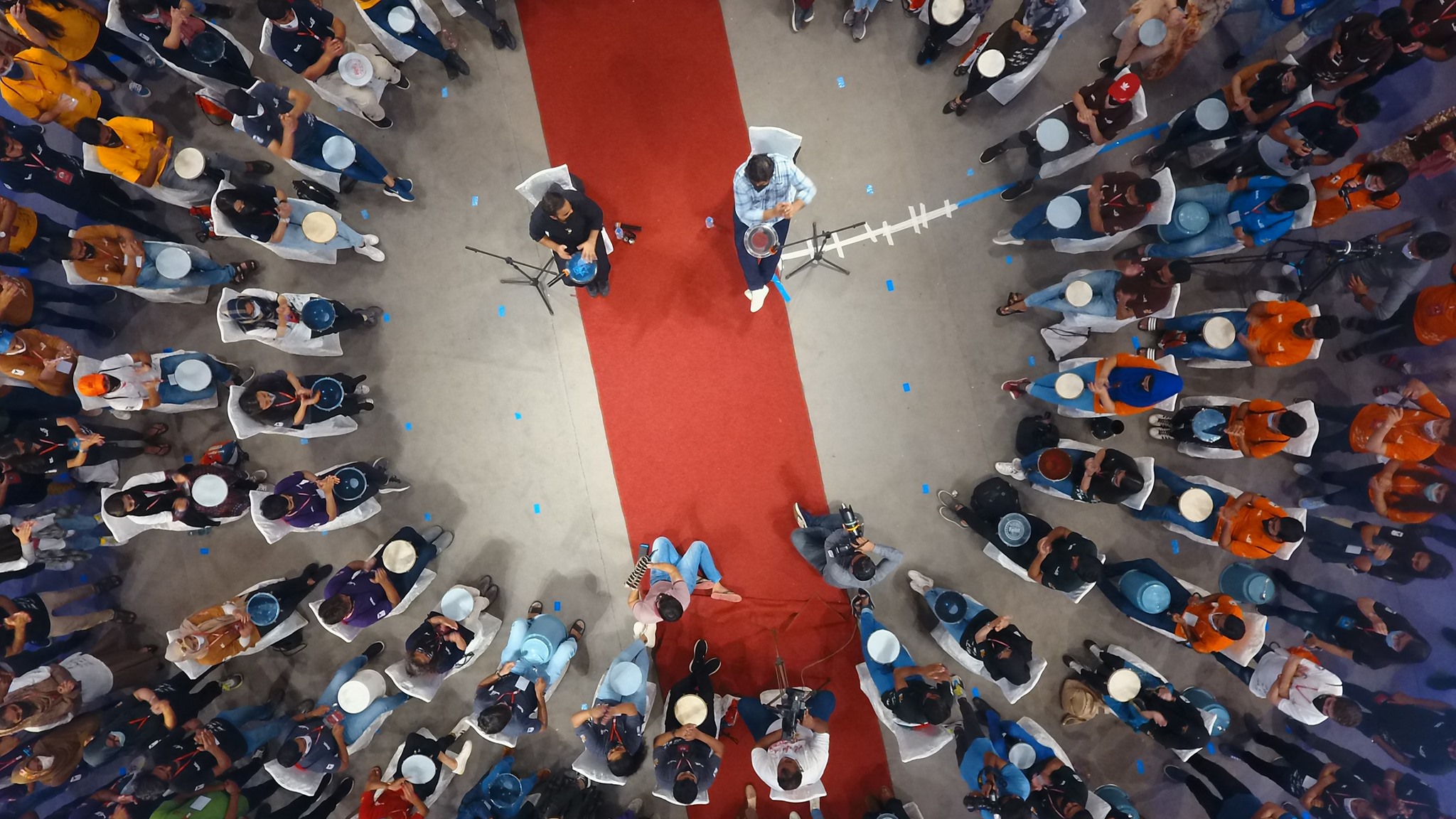
A drum circle is a group drumming experience where people sit together in a circle and play percussion instruments to create rhythms collectively. Unlike a traditional concert, there is no audience and no performers. Everyone in the circle becomes part of the music.
Participants typically play instruments such as:
- djembes
- bongos
- frame drums
- shakers
- tambourines
- other percussion instruments
A drum circle is usually guided by a facilitator who helps the group build rhythms together. The facilitator does not control the music but instead encourages participation, creativity, and listening.
The result is a powerful shared experience where individuals contribute to a larger collective rhythm.
The Purpose of Drum Circles
While drum circles may look like simple musical gatherings, they serve many deeper purposes.
Historically, drumming circles have been used to:
- bring communities together
- celebrate important events
- promote healing and wellbeing
- express cultural traditions
- strengthen social bonds
Modern drum circles continue this tradition by creating spaces where people can connect, relax, and express themselves through rhythm.
Do You Need Musical Experience?
One of the most beautiful aspects of a drum circle is that no musical experience is required.
You do not need to know how to read music or play an instrument. In fact, most people who join a drum circle are complete beginners.
Simple rhythms are introduced gradually, and participants naturally start listening to each other and synchronizing their beats. Within minutes, a room full of strangers can become a rhythmic community.
This accessibility is one of the reasons drum circles have become popular around the world.
The Benefits of Drum Circles
Beyond music, drum circles offer a range of mental, emotional, and social benefits.
Stress relief
Rhythmic drumming helps calm the nervous system and release tension.
Improved mood
Group drumming can stimulate endorphins and create feelings of joy and connection.
Social connection
Playing rhythm together builds a strong sense of belonging and shared experience.
Creativity and expression
Participants are encouraged to explore their own rhythms and musical ideas.
Because of these benefits, drum circles are now used in many different environments including schools, wellness programs, festivals, and corporate events.
Drum Circles in Modern Events and Communities
In recent years, drum circles have also become popular as interactive experiences for events and organizations.
Companies often use drum circles for corporate team building, as they naturally encourage communication, listening, and collaboration.
Festivals and cultural events use drum circles to bring audiences together in an engaging way. Even weddings and private celebrations have begun incorporating drum circles as a joyful shared activity.
Across the world, the drum circle continues to evolve while still preserving its core purpose: bringing people together through rhythm.
The Growing Culture of Drum Circles in Pakistan
While drum circles have long been practiced in many parts of the world, the concept of participatory group drumming is still relatively new in Pakistan. Over the past decade, however, the movement has slowly grown as more people discover the joy and connection that comes from creating rhythm together.
One of the groups that has played a significant role in introducing and expanding drum circles in the country is Drum Circle Pakistan, founded by Haider Jamil. For more than 14 years, the group has been organizing and facilitating drum circles across the country, making it one of the earliest and most recognized drum circle communities in Pakistan.
With passionate core members like Zain Shahid and a growing network of drummers, Drum Circle Pakistan has conducted sessions in cities including Lahore, Karachi, Islamabad, Rawalpindi, Peshawar, Multan, Sialkot, Faisalabad Gujranwala, Hunza, Murree, Bhurban and Nathiagali and many more.
Through corporate events, festivals, universities, restaurants, weddings, and community gatherings, these sessions have introduced thousands of people to the experience of participatory drumming. In many ways, the group has helped shape the modern drum circle culture that is now emerging across Pakistan.
The Magic of the Circle
At its heart, a drum circle is not about musical perfection. It is about participation.
When people sit together in a circle and begin to play, something remarkable happens. Individual rhythms blend into a shared pulse, and a group of strangers becomes a community connected by sound.
In a world that often feels rushed and disconnected, the drum circle reminds us of something simple and timeless: rhythm has the power to bring people together.
And sometimes, all it takes is a drum and a circle to create that connection.
I hope you won’t need to ask “What is a drum circle?” again!
No responses yet